- Home
- Technology
- Leaflet
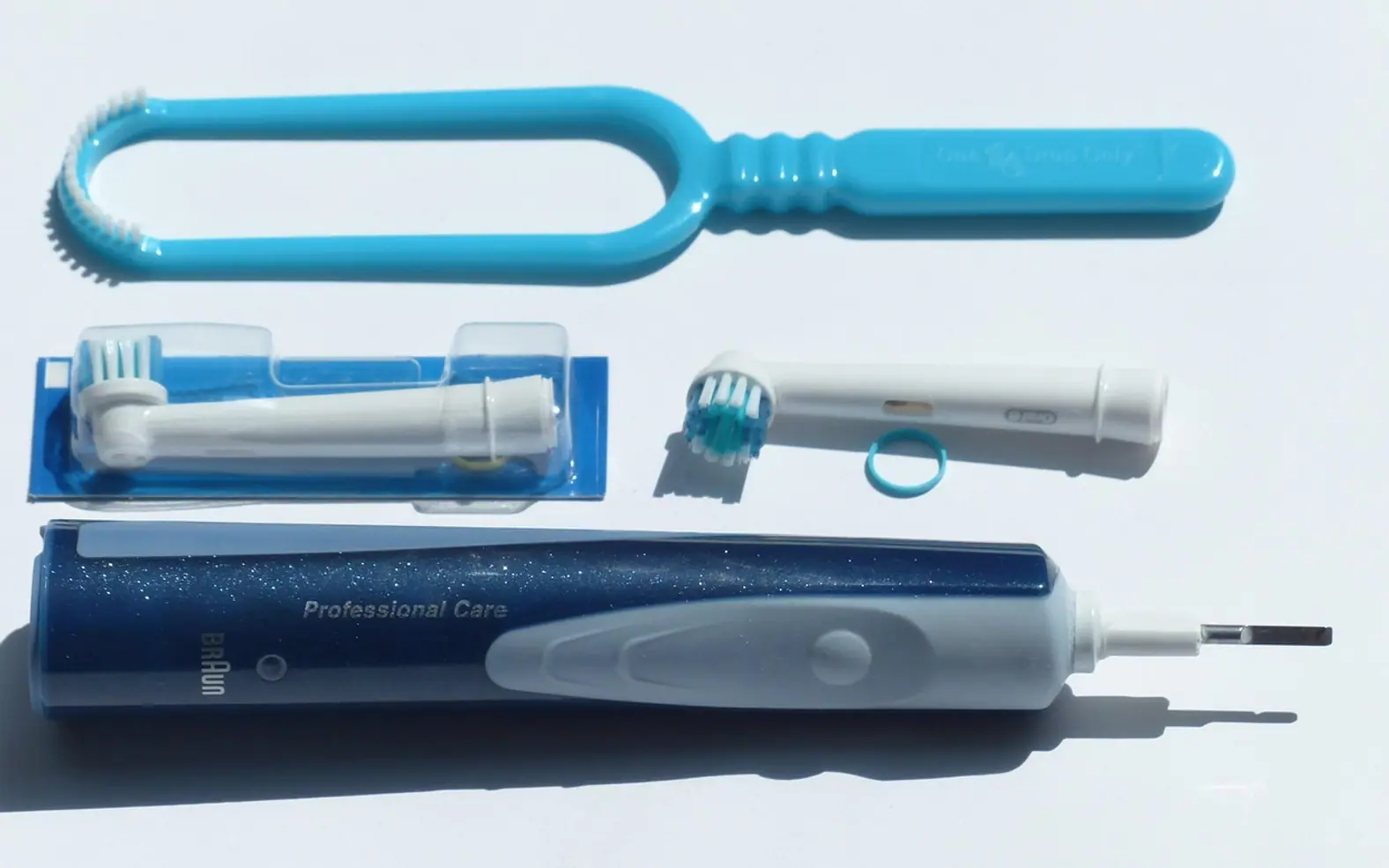
Quick takeaways A powered brush is not magic, but it can make good brushing easier for some people. Here is how the two types compare and how to decide which one suits you.
Short answer: an electric toothbrush is not magic, but for many people it makes good brushing easier. A manual brush used carefully for two full minutes can clean just as well. The better brush is the one that suits your hands, your habits and your mouth, and that you will actually use properly twice a day.
Below is a plain comparison of the two, the situations where a powered brush tends to help, and the features that matter more than the price tag. If you have gum problems, braces or a condition affecting your grip, your dentist or hygienist can tell you which type suits you.
How each type cleans
A manual brush relies entirely on you. The angle, the pressure, the speed and the time spent in each part of the mouth all come from your hand and wrist. That gives you full control, which is an advantage if your technique is already good and a weakness if you tend to rush.
Powered brushes take over part of that work. Most use one of two movements:
- Oscillating-rotating heads. A small round head turns rapidly back and forth. You move it slowly from tooth to tooth and rest it on each one for a moment.
- Sonic or vibrating heads. A head shaped more like a manual brush vibrates at high speed. You glide it along the gumline instead of scrubbing.
Both styles do their job as long as they are guided slowly and lightly. Neither should be pushed hard against the teeth.
Electric toothbrush vs manual at a glance
| Point of comparison | Manual brush | Electric brush |
|---|---|---|
| Upfront cost | Low | Higher, plus replacement heads over time |
| Technique | Depends fully on you | Movement is built in; you steer it |
| Timing | You keep track yourself | Many models have a two-minute timer with a pulse every thirty seconds |
| Pressure | Easy to scrub too hard without noticing | Some models warn you when you press too hard |
| Travel | Light, nothing to charge | Needs a charger or batteries and a case |
| Grip | Slim handle | Thicker handle, often easier for stiff or sore hands |
| Feel | Quiet and familiar | A buzzing sensation that takes a few days to get used to |
Who tends to benefit from a powered brush
Dental teams often suggest trying an electric brush in a handful of situations:
- People with arthritis, limited hand movement or a weak grip, since the handle is thicker and the head does the fine movements.
- Anyone who knows they rush, because a built-in timer makes "two minutes" feel less vague.
- Heavy-handed brushers, who may find a pressure warning a useful nudge.
- People with fixed braces, where a small head and steady movement can help around brackets. Our look at orthodontic technology from clear trays to smart brackets explains what modern treatment involves.
- Children and adults who simply brush for longer when the brush feels like a gadget.
Someone with careful technique, healthy gums and no trouble holding a brush may notice little difference. That is a perfectly good reason to stay with a manual one.
Features worth paying for, and those you can skip
Worth having
- A two-minute timer, ideally with a short pause every thirty seconds to remind you to move to the next quarter of the mouth.
- A pressure sensor, if you know you press hard.
- Soft replacement heads that are easy to find and fairly priced, since you will be buying them for years.
- A battery that lasts a week or more between charges.
Usually optional
- Lots of cleaning modes. Most people end up using just one.
- App connections and brushing maps. Some find the feedback motivating; others stop opening the app after a fortnight.
- "Whitening" or "polishing" modes, which do not change the natural colour of teeth.
Common slip-ups with each type
With a manual brush, the usual problems are brushing for well under two minutes, sawing sideways with a lot of force and forgetting the inner surfaces. Our step-by-step guide to brushing your teeth properly covers the angle and the order that help.
With an electric brush, people often move it too fast, as if it were a manual brush, or press it firmly, which slows the head and can irritate the gums. Another frequent slip is keeping the same head far too long. Bristles wear out on powered heads too, and the warning signs are the same as for an ordinary brush; our article on when to replace a toothbrush lists them.
Questions readers often ask
Is an electric toothbrush better than a manual one for sensitive gums?
It can be, if it has a soft head and a pressure warning, because it is harder to scrub. A soft manual brush used gently is kind to gums as well. If your gums bleed regularly or feel sore, see your dentist rather than relying on a change of brush.
Do I still need to clean between my teeth?
Yes. No brush head reaches fully into the gaps between teeth. Floss, small interdental brushes or a water flosser cover that gap; our guide to using a water flosser explains one option.
Can the whole household share one handle?
Sharing a handle with separate, clearly marked heads is common. The heads themselves should never be shared.
What about cheap battery models?
Simple battery brushes give you the movement, and sometimes a timer, at a lower price. Check how easy the replacement heads are to buy before you choose one.
Choosing between them
If you brush carefully for two minutes and your dentist is happy with your gums, a manual brush is fine. If you rush, press hard, wear braces or find a slim handle awkward to hold, a powered brush is often worth a try. Either way, soft bristles, a light touch and cleaning between the teeth matter more than the motor.
One thing first
A guide, not a verdict
Our pages are good for understanding a topic and for writing down the questions you want to ask. They cannot tell you what is happening in your own mouth, lungs or body.
If anything here seems to clash with what your dentist, pharmacist or doctor has told you, their advice comes first.
The writers at Inside Schizophrenia
The topic map
Before you use this site. Everyday reading only. Your dentist, pharmacist or doctor knows your own situation.